
Best 55+ Communities in Tucson, AZ: 3 Types Compared
There are only three kinds of 55+ communities around Tucson: a bubble, a town, and a neighborhood. The brochures all look the same, the amenity lists read the same, and picking the wrong kind can be one of the most expensive mistakes you make. Different daily life, different monthly carry, and a very different answer when it's time to sell.
I'm going to walk you through three communities that are actively building right now, one of each kind, and tell you exactly who each one is for. At the end, I'll tell you something I don't think anybody else in this market would say out loud: which of these builders is actually negotiating right now and which one isn't. More importantly, I'm going to tell you why, so whenever you're watching this, you can read it for yourself instead of taking my word for where the market was the week I recorded this.
This video is narrow. It's not for everybody moving to Tucson. It's for people who are specifically shopping active adult communities, 55 and up, deed restricted amenities, the whole thing. If that's you, this is going to be the most useful half hour I can give you. The differences here are structural: how far you drive, what your monthly carrying costs actually are, what happens when you sell. You can't cover that honestly inside a bigger list. So we're going deep on three, and at the end, I'll put them side by side.
For those of you who don't know me, my name is Rich, and I work professionally in real estate right here in Tucson. My family's been in this town for over 150 years. The specific reason I can make this video is placing people into these communities is something I actually do. I've walked these communities on random weekdays, I've written contracts in them, and I've sat with buyers afterwards and heard what they got right. Everything in here comes from being in these places, not from reading about them online.
Table of Contents
SaddleBrooke Ranch: The Bubble Model
A bubble is a community where you really never have to leave. That's the product. Golf cart to dinner, to the course, to a friend's house, to pickleball. SaddleBrooke Ranch is north of Tucson in Pinal County, built by Robson, and it's the clearest example of the bubble model you'll find anywhere in this market.
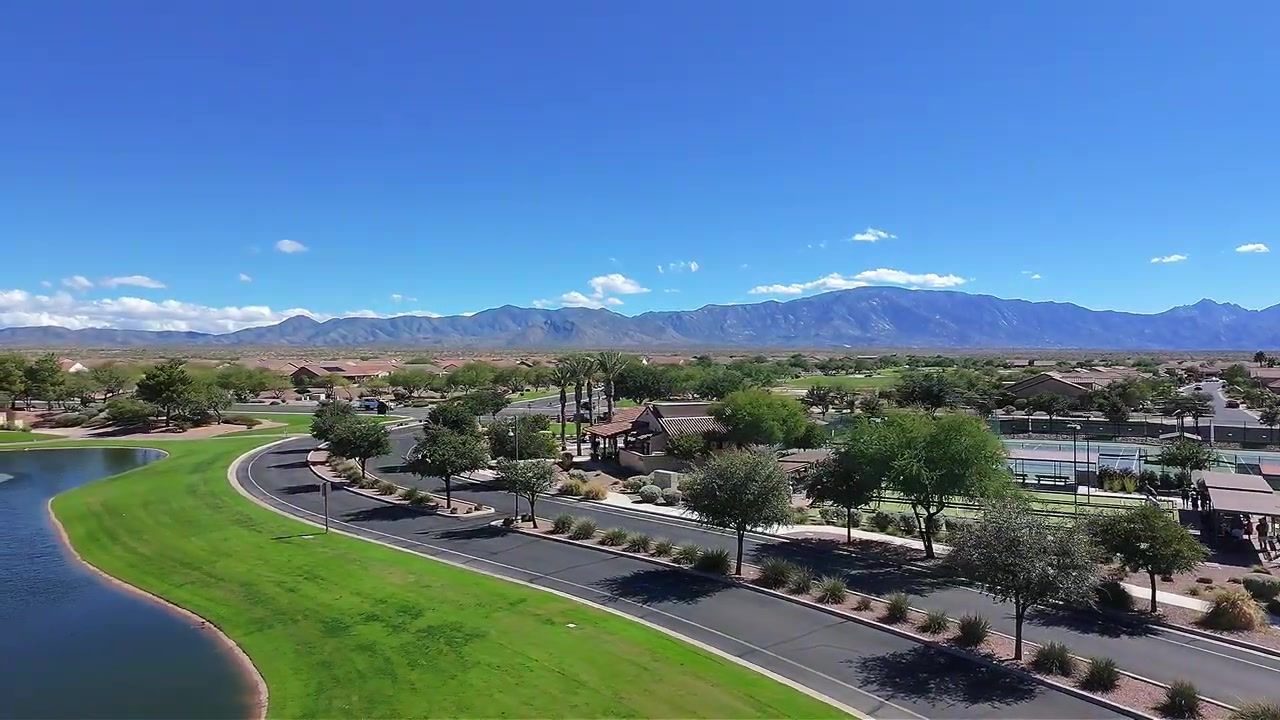
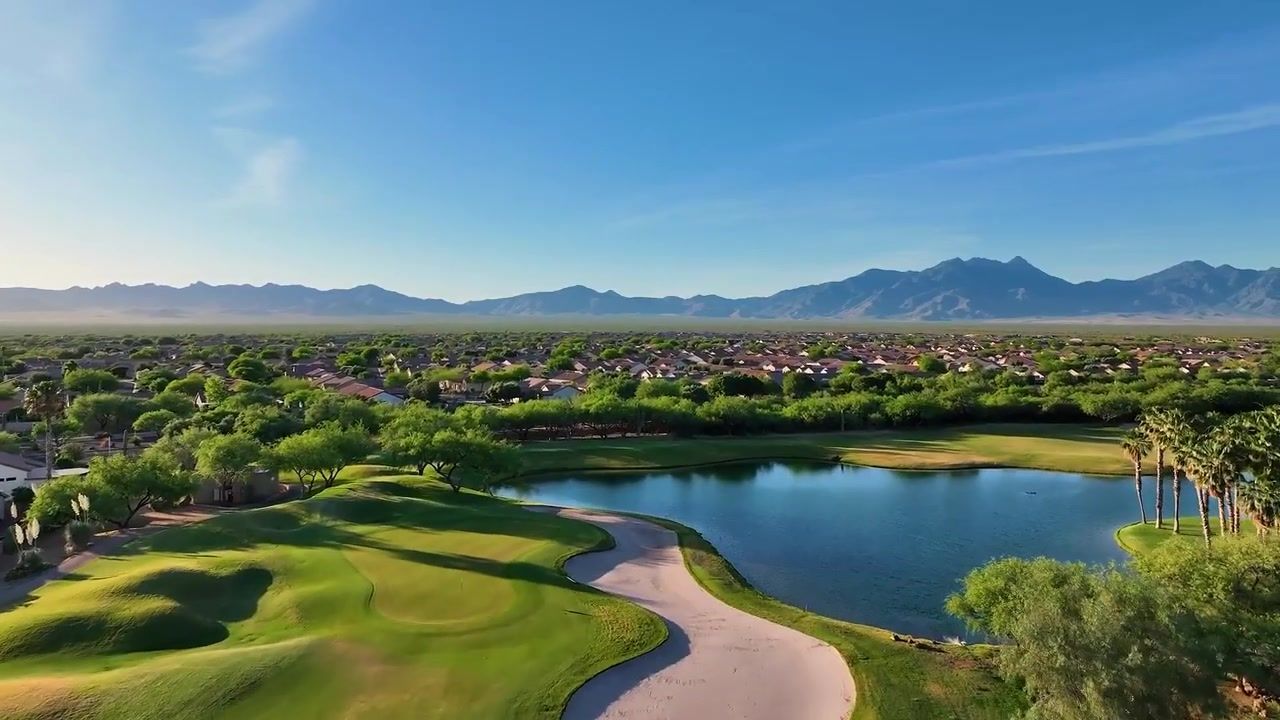
When you pull through the gate, it feels very secluded, very private. Manicured golf courses, very clean streets, walking paths, everything you would expect. The clubhouse is a centerpiece. It's large, it's very nice, it looks out over an amazing part of the golf course with a nice body of water. And because you're so close to the Catalina Mountains, they are very difficult to miss. They are imposing, to say the least, which is a good thing. It really is beautiful terrain out there. It feels like a little slice of paradise, to be honest with you.
The amenity list isn't the interesting part. How much it gets used is. Pickleball is a huge thing in the Robson communities. I've been out there on random days of the week, a random Tuesday afternoon, a random Wednesday morning, and there is never a shortage of activities going on. Pickleball, bocce ball, swimming, all sorts of things. Not a Saturday, just a Tuesday. The Ranch has 24 pickleball courts, and between the Ranch and SaddleBrooke, there are 63 holes of golf across five courses.
The food situation surprised me. The Ranch has four places to eat and drink right inside the gate. You've got a grill, a bistro, even a hot dog place called Ed's Dogs named after the founder. I've grabbed lunch there several times when meeting clients. And a working brewery. It's got incredible views of the Catalina Mountains and a pretty awesome rustic style bar with a good mix of feeling high end as well. There are two main clubhouses at the Ranch: La Hacienda and the Ranch House . Both are really nice. Personally, I think I'd probably pull up a seat at the Ranch House. It's a little bit more informal, seems a little bit more of a social vibe as well.
So that's the upside, and it's real. Here's the trade: SaddleBrooke and SaddleBrooke Ranch do feel a bit removed. Now luckily, these are large communities that have so much of what you'd want to do day to day, you don't really need to think about leaving too much. But when you do leave, you feel it. In Oracle and Catalina, you've got some grocery stores, some fast food, convenience stores, a Walgreens. Most of the essentials are not too far away. But if you're going to Target, Walmart, Costco, or you want to go to a movie theater, a live event, or you're trying to make your way to Tucson International Airport, you're definitely going to be driving quite a bit.
And here's the one nobody says out loud. Out of the three communities in this video, this is the only one with no interstate at all. Highway 77 is a state highway. That's your road. Hold on to that because it's part of why this builder negotiates differently than the other one. I'll get to that at the end.
Something genuinely useful, and I got it wrong for myself before I checked: both of these are in Pinal County, not Pima County. The mailing address says Tucson, which tends to fool almost everybody, but the parcels are actually Pinal, and Pinal is cheaper. On the county and community college part of your tax bill runs about $1.25 per $100 of assessed value, cheaper than Pima. So on a $500,000 home, for instance, that's roughly about $625 a year that you're going to save. That's free money right back in your pocket you happen to capitalize on just between deciding on two communities on either side of the line.
One last thing, and it's the most useful thing in this segment: base prices start around $336,000 at the Ranch. The resale median is north of $600,000. That is an enormous gap. And it's fair to ask why. A lot of that is lot premiums and upgrades that people will select and add to the base price of the home when they build. There are some of the most expensive lot premiums in new construction, especially for production-built homes really anywhere in this market. And you'll find those right there in SaddleBrooke and SaddleBrooke Ranch.
By the time you add the lot premiums, the builder upgrades, the hardscaping, the backyard pool, that builds up your gap between the base pricing and what they're advertising for you to get into a home. Same lesson as the builder rate video that I've done not too long ago. The number on the sign is not really the number that you pay, and a lot premium is a line item, which means it's something that you can have a conversation about if you've hired the right person who knows how to navigate that negotiation.
So who's this right for? Somebody who wants their social life a golf cart ride from the front door and who's fine driving for the big stuff. And the reaction out there is genuine excitement. Just going for a tour, you're bound to make a friend, have a quick conversation with somebody who lives out there. It's really easy to do a quick test drive of what it would be. That's unusual. Most communities you have to imagine. This demonstrates itself very easily with you just spending an hour or two in the community.
The two objections I do hear the most tend to be around the HOA amount for people specifically not really getting a lot of value out of all of the social elements, the clubhouse, all of the additional amenities. And then the second one is the price of the homes, and both are completely fair. The HOA runs around $3,400 a year at the Ranch, plus a one-time fee at purchase, and golf is a completely separate line item on top of that if you want it. And the price thing is the lot premiums, the upgrades. It is quite an exclusive community, and it's unique. There isn't a whole lot of competition for these types of communities in Southern Arizona, which we're going to talk about a little bit later in the video.
Bottom line, know what you're buying and neither one will be a surprise. And knowing what you're buying before you actually write the offer is most of what we actually do.
SaddleBrooke: The Original Bubble
SaddleBrooke is about four miles from the Ranch, same builder, same Pinal County location, same experience on the ground. I'm covering them together because between them they cover a price range nothing else here touches.
SaddleBrooke has 14 pickleball courts and shares those 63 holes of golf across five courses with the Ranch. The clubhouse overlooks the golf course. It's secluded, it's private, you've got the same Catalina Mountain views, the same manicured courses, the same walking paths. It's the same bubble model. Never have to leave the gate for your social life.
The same trade-offs apply: removed location, no interstate access, Highway 77 only. Same Pinal County tax savings, roughly $625 a year versus Pima on a $500,000 home. Same heavy lot premiums as the Ranch. Same builder who holds firmer on price due to lack of competition. I'm working on getting in there with a camera for an updated video tour, so subscribe so you catch that one.
The default is social. You have to opt out. That's the bubble. If you want that at the original scale, that's SaddleBrooke. If you want it at the newer Ranch with four places to eat inside the gate, that's SaddleBrooke Ranch. Same experience, same builder, same county line, same lot premiums, same negotiation position.
Quail Creek: A Bubble Inside a Town
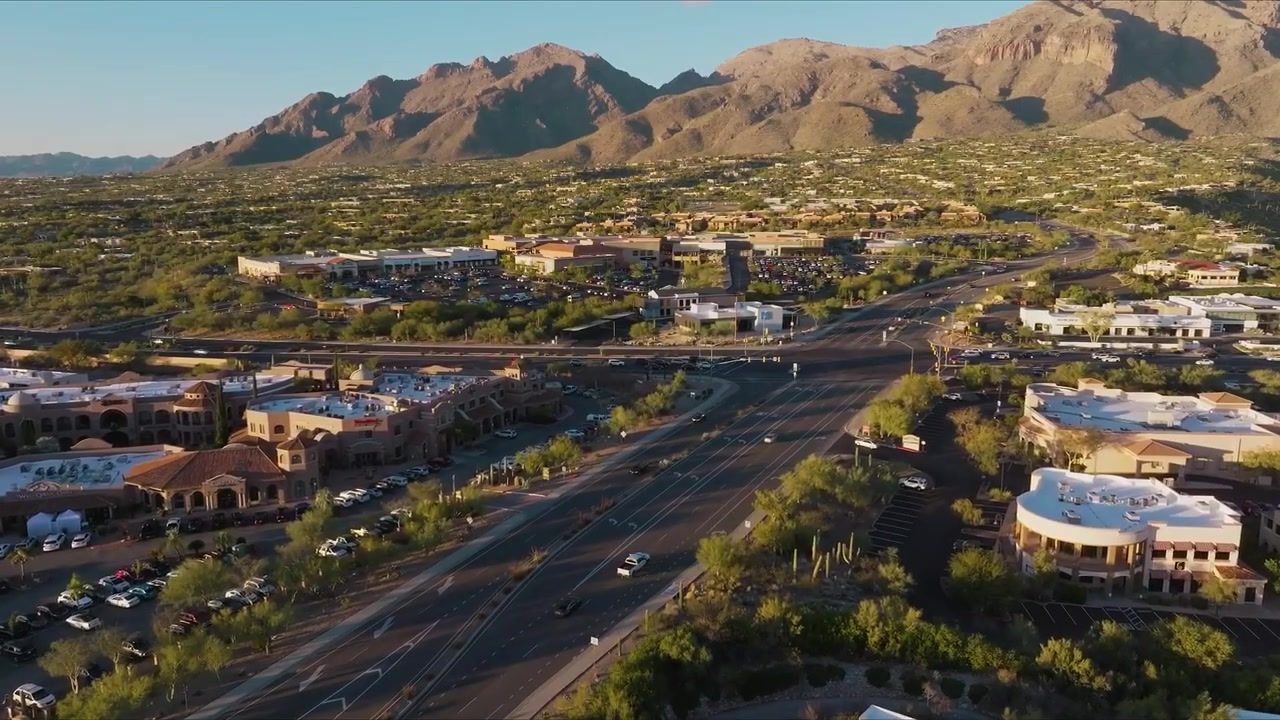
This next one is the same builder but a completely different setting, and the best illustration of why the three kinds framework really matters at all. Quail Creek is a gated Robson community in the Green Valley area, which is south of Tucson, and it is a bubble. 32 pickleball courts, 27 holes of golf, four separate amenity buildings, three places to eat inside the gate. The newest piece is the Canyon Club , which is a 36,000-square-foot resort pool, indoor lap pool, fitness center, spa, bistro with a pizza oven right on the terrace. It's the newest amenity building in any of these communities.
But here's the thing that makes this community interesting, and it took me a minute to understand it myself. Green Valley has one of the largest recreation operations you'll find anywhere. Fifteen recreation centers, thousands of member households. It is genuinely impressive and it is right there. And the people who live in Quail Creek, honestly, most of them barely use it. It's unusual that you'd find somebody using the Green Valley rec amenities over what they already have inside their own community. Why drive to a rec center when you've got four amenity buildings inside your own gate?
Where they do go out is for a change of scenery. Local watering holes around Green Valley or down to Tubac, which is a little bit further south. Local events. Most of what they do in a week happens inside the gate, but the rest of it is a deliberate trip outside the gate. So here's the one thing to take away from this. You can be inside a town and even then still never use it. And if you don't know these are two different things, the community and the environment around it, you'll tour one and judge the other.
One thing I want to be precise about, because I hear it stated wrong constantly: Green Valley is not a 55+ town. It's an unincorporated community with no city government, which means no mechanism to age restrict itself. The restrictions out there are private covenants recorded subdivision by subdivision across dozens of separate associations. Most of it is restricted, but not all of it. And Green Valley Recreation itself says its membership is not age restricted. So if you're looking at a specific house, check that specific subdivision's covenants. Don't take anybody's word for the whole area, including mine.
And this is the same builder as the first one, which matters a lot when we get to who's actually negotiating. On price, Quail Creek is the lowest entry of the three. Base price starts around $315,000. And there's a community facilities district on part of it, an extra tax line. I'll explain properly in just a minute.
Worth knowing, Quail Creek's district rate actually came down from $2.26 per $100 down to $1.82. A falling district rate is a good sign. It means the bonds are getting paid off rather than piling up. The district adds roughly $910 a year on a $500,000 home on top of your regular county taxes. Almost nobody checks for it.
Now, who's this right for? Somebody who wants the full bubble at the most accessible price point of the three, and who's actually going to use what's inside the gate. And all three of these communities are still building, which is the only reason this video is possible at all. Five of the 55+ communities in this market are resale only. The builder is completely gone. Three still have a builder selling, and that's where the room for negotiation is in today's market.
One more thing about Green Valley that matters for relocating buyers: it's the most retirement-dense area in the region, median age over 70. But Green Valley has no hospital or emergency room. It had one and it closed down permanently a few years ago. My wife, when she was going through nursing school, was a scribe at that hospital for about a year, and there's no published plan to reopen that. There's an urgent care there, a VA clinic, a cancer center. There is not an emergency room. The nearest ER is Northwest Medical Center in Sahuarita , which is only 18 beds. That's not a reason to avoid Quail Creek. It's just one factor among several, but it is a real limitation of being further out. And you're entitled to know that before you start buying.
For freeway access, Quail Creek has I-19 at Sarita Road. For groceries and essentials, you're fine. For big-box runs, Target, Walmart, Costco, you're driving. Same builder as SaddleBrooke and the Ranch, which means same negotiation position: holds firmer on price due to lack of direct competition.
Del Webb at Rocking K: The Neighborhood Model
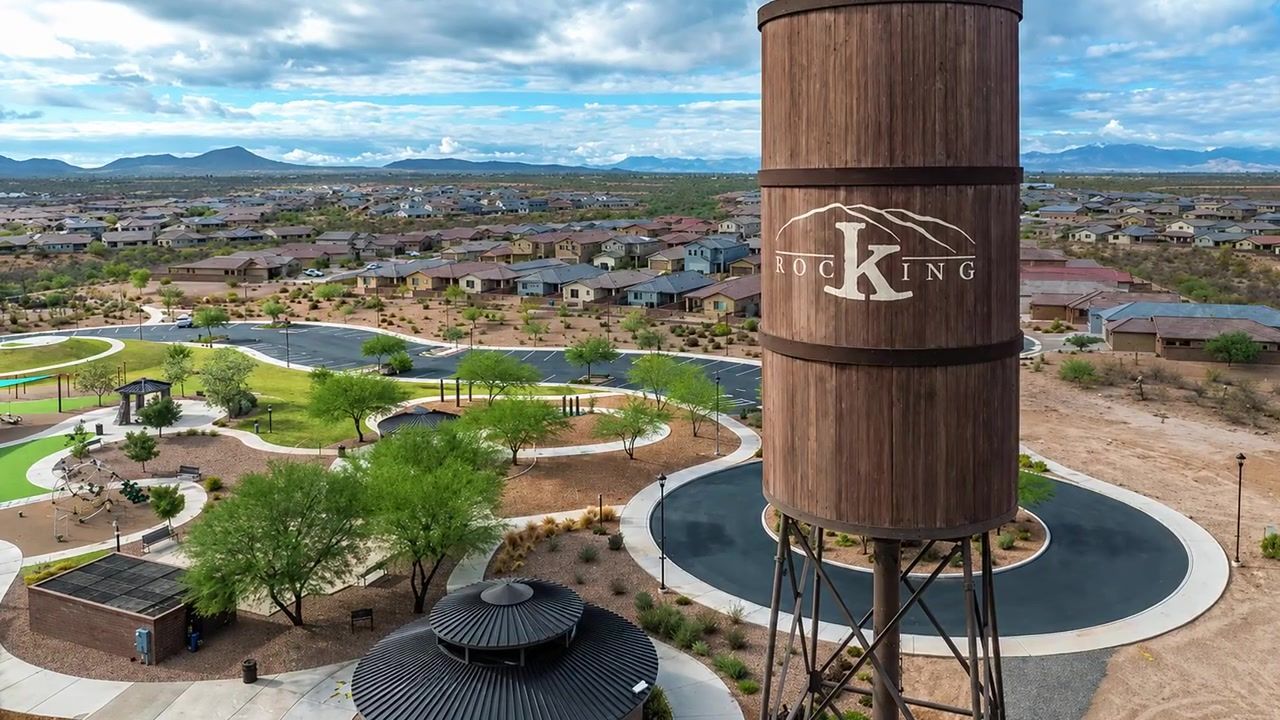
The third one is a completely different animal altogether, and the one that I think is the most misunderstood. Del Webb at Rocking K is in the southeast part of Tucson. Del Webb is Pulte's 55+ brand, 625 homes planned at buildout. And it's not a bubble, it's a neighborhood.
It sits inside Rocking K, which is a 5,000-acre master plan with eight or nine builders working currently in it, including a whole neighborhood of build-to-rent homes as well. You are not in an enclosed world out there, you're in a 55+ pocket of a regular growing mixed community, which for some people is exactly what they're looking for.
The Del Webb communities have a great event calendar, and it's a really good place for optional socializing if you choose. And I think there's a good balance of just being able to enjoy your own peace and quiet without feeling obligated to be super social and partake in every single one of these events. At SaddleBrooke, the default tends to be social. You kind of have to opt out. Here in Del Webb, the default is available. You get to opt in. Neither one of those is better. They're just different. And nobody tells you which one you're buying into unless you're watching videos like this.
If you've ever worried about moving somewhere and being overwhelmed or the opposite, being isolated, that distinction is the most useful thing I can provide you in this video.
Now for price, because on the surface this looks like the most expensive one, but I honestly don't think it really is. Base pricing starts around $392,000. It is higher than Quail Creek. It's higher than the Ranch, but the base price isn't the real comparison. Del Webb includes more in the base price and their lot premiums tend to be where the big savings is. Remember what I told you about SaddleBrooke? Some of the heaviest lot premiums in the entire market. Here, lot premiums are where you save. Same question, opposite answer, which means the sign says this is the expensive one, but the delivered price may say the opposite. That's the whole game with new construction. The advertised number is not always the price. In fact, it almost certainly is never the ultimate price.
Okay, here's the one that almost nobody checks, and it's bigger than the county line. There's a community facilities district on Rocking K. A district is a separate taxing authority that funded the infrastructure out there: roads, sewer, water. It stacks on top of your regular county taxes. So $2.38 per $100 of assessed value on a $500,000 home, that's roughly $1,190 a year. Pinal versus Pima was worth about $625. This district is nearly double that stacked on top of the more expensive county. Everybody compares the county, almost nobody checks for the district.
And I want to be clear what this is, and it is not a reason to avoid this community. It is a reason to know. That district number, the $1,190 a year, that was not on anybody's website. It was hidden in a county document.
Two more things to show you: which builder is actually moving right now, and what happens when you go to sell. So who's this right for? Somebody with an easier-going lifestyle who doesn't want a ton of emphasis on social atmosphere, who wants easy access to a wide range of things to do, but they want it more so on their own terms. For that person, Del Webb might be the perfect blend of exactly what you're looking for.
For location, Del Webb at Rocking K has a direct interstate on-ramp. It's the closest of the three to big-box stores, movies, and the airport. Groceries and essentials are fine for all three communities. But Rocking K is the only one where you're not driving 30 or 40 minutes for a Costco run. The nearest ER is TMC Rincon on Houghton . It's newer, much smaller than Oro Valley Hospital, but it's there.
Now, the builder. I write contracts with all of these builders and they do not behave the same way at the table. In my experience, the bigger negotiation is at Del Webb. That's not a knock on Robson. And it's not a statement about which product is better. Pulte builds a great home. Del Webb is an established brand with a real track record. And I'd put a client there without hesitating and have done so plenty of times in the past. It's about position.
Robson has built their community specifically so that they don't have much direct competition. The amenity package is enormous. There is not really another SaddleBrooke in this market, not at that scale, not with that much inside the gate. And from the builder side, when there's no real substitute for what you're selling, you can hold firmer on price. That's not stubbornness, that's a position.
Del Webb is in a different spot. It is a neighborhood model, and there's more communities like it here and across the county. More comparable options mean more competition, and more competition is what produces room for us to negotiate, which runs exactly opposite to what most people assume. You'd think the fancier place with the bigger clubhouse has more margin to give, it doesn't. What sets flexibility is how many alternatives you have, not how nice the amenities are.
Now here's why I'm giving you the reason instead of just the answer. That position changes. Builders release new phases, new lots come out, inventory builds up or it clears. A builder who is firm this quarter can be negotiable next quarter and the other way around. And there's a specific version of that worth watching for, which I've covered in a builder video not too long ago. When a builder releases a brand new phase of lots, every buyer shopping in that community turns and looks at that new phase. All the attention moves from what it was looking at to the brand new phase, which means the lots that were already sitting, they just got really quiet. And for the first time in months, those older lots didn't get worse, they just got lonely. So a firmer builder announcing a new phase is not bad news for you. It can be the opening, just not for the thing everybody else is looking at.
And I'm not going to promise you a number because I cannot do that. What's negotiable depends on the builder, the community, what they're sitting on, and where they are on their own calendar. Don't ask, what's your best price? Ask what they're sitting on, how long it's been sitting, and whether they're releasing more soon. Those three answers tell you more than any advertised incentive will.
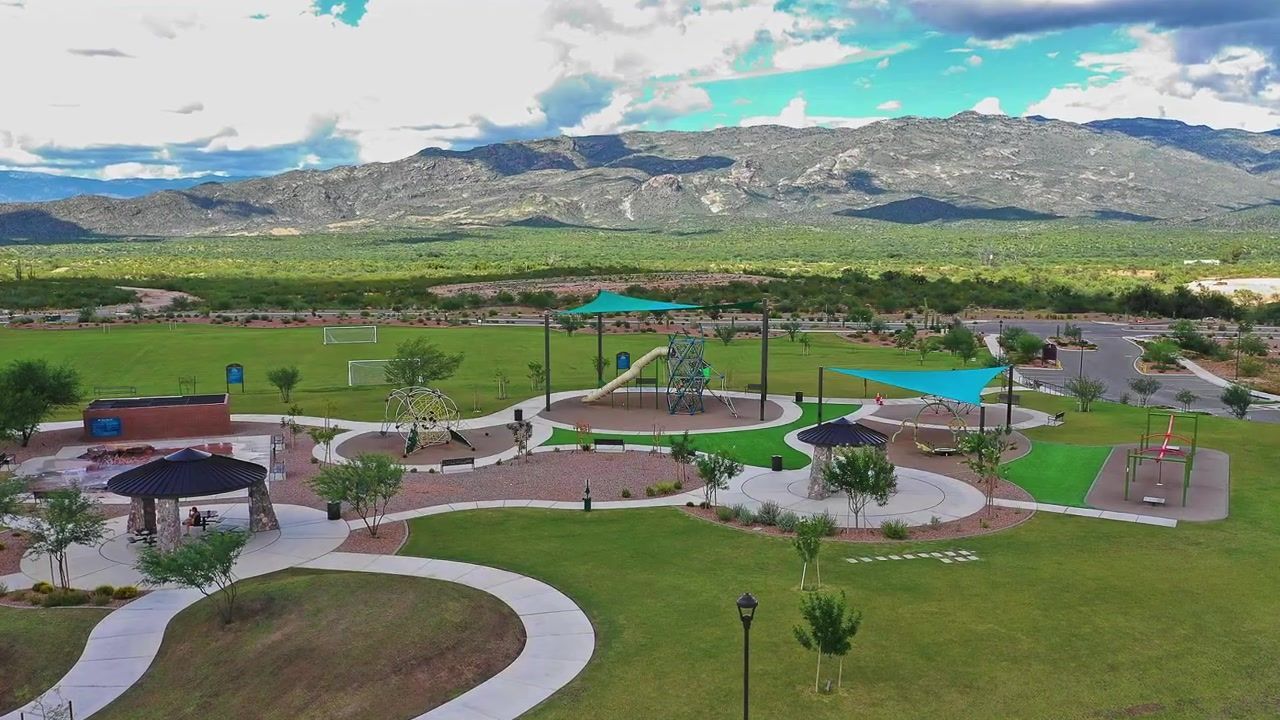
Which Community Is Right for You?
Three communities, six measurements, here's the board. Nearest emergency room and urgent care, which in all three is closer than the hospital, and it isn't what separates them. All three have a full hospital with a 24-hour emergency room as their closest option, but three of the hospitals are not the same thing.
SaddleBrooke Ranch's nearest is Oro Valley Hospital, about 176 beds. Rocking K is TMC Rincon on Houghton. It's newer, but it is much smaller. Quail Creek's is Northwest Medical Center in Sahuarita, which is only about 18 beds. Because nearest emergency room and nearest hospital that can keep you are two completely different questions, and the bed count is where that shows up.
For the freeway, Rocking K is the only one of the three with a direct interstate on-ramp. Quail Creek has I-19 at Sarita Road. SaddleBrooke Ranch has no interstate. Groceries and essentials, all three are fine. Big-box stores, movies, airport: Rocking K is the closest, Quail Creek is the one in the middle, and SaddleBrooke Ranch is the one with the longest drive.
And for food inside the gate, this one tells you everything. SaddleBrooke Ranch has four places, Quail Creek has three, Del Webb at Rocking K, zero, at least in the published amenity package. That is the bubble and the neighborhood in one row with no numbers needed.
Check every one of these distances yourself before you buy. Addresses change, facilities change, and the Maps app will tell you the truth in about 30 seconds.
So which one are you?
- Choose SaddleBrooke Ranch if you want your whole life inside the gate, golf cart to dinner, something happening on a random Tuesday, and you're fine driving for the big stuff.
- Choose Quail Creek if you want that at the most accessible price point and in a real town right outside.
- Choose Del Webb at Rocking K if you want an active community but not an enclosed one, opt in rather than swept along, and the freeway with the hospital genuinely close.
Notice that none of those sentences said anything about which community is better. They're more so about which person you are.
Now, there are five other 55+ communities in this market that are resale only, builders gone. Del Webb at Dove Mountain in Marana, full disclosure, I live in Dove Mountain, not in the Del Webb community, but in the master plan, and take what I say with that in mind because I am biased. Neighborhood model, same as Rocking K, around 600 homes, but there is no golf within that particular community.
Next, Del Webb at Rancho Del Lago in Vail. That is gated. It's about 585 homes. It does have a full-time activities director. And something changed out there recently. The golf course, Del Lago, has closed permanently. The general manager said rising costs and decreasing demand made it no longer feasible for them to operate that. And people keep asking me what that's going to do to values. And the honest answer is I feel confident it'll have some impact. An amenity on that scale closing most likely hurts demand and values at some degree. To what degree? That's the crystal ball question. I couldn't credibly predict that. Nobody could. That's a decision that the open market makes, not somebody making YouTube videos and not any real estate agent. One practical thing, if you're looking out there, check whether comparable sales you're shown are from before or after the closure. A lot of the listing sites still advertise the course.
Next, Sun City Vistoso in Oro Valley, now legally Sun City Oro Valley. The original Del Webb here, about 2,500 homes, three rec centers, a 12,000-square-foot fitness center. It's a pretty big established community. And I have to clear something up because national websites get it wrong constantly. There are two golf courses in Rancho Vistoso and people mix them up all the time. The Vistoso Golf Course closed years ago and it's now a public nature preserve. That was never Sun City's course. Sun City has its own 18-hole course, which is called The Views , and it is open.
And Sun City has a cost structure worth understanding upfront. Dues are about $2,865 a year and they're up about 16% in the last two years. But the one that gets people is the capital improvement fee, roughly $4,300 paid by a buyer at closing plus a transfer fee, about $4,600 at the closing table separate from the dues. That's not usually in the listing price and it's not in any affordability calculator that you're going to find online either.
Same three lifestyles, no builder, which means no builder to negotiate against. That cuts both ways really.
Conclusion
Before choosing a 55+ community, consider what happens when it's time to sell. These homes may have a smaller buyer pool, seasonal demand fluctuations, and competition from builders still selling new homes. None of that makes resale impossible, but it's important to know what to expect.
My advice? Tour one community of each type, compare the six key factors discussed in this video, and ask early whether there's a community facilities district and how much it adds to your annual taxes. Focus on your lifestyle, ongoing costs, location, and resale prospects, not just the clubhouse or advertised home price.
The goal is to find a community that fits your lifestyle today while understanding the financial implications down the road.
If you're buying in the Tucson area within the next 90 days, call/text me at 520-639-9117 or book a FREE consultation here. We're averaging over $44,000 in savings for buyers through price negotiations and seller credits, and our compensation has been paid by the builder or seller in every buyer transaction to date.
I also maintain a free, weekly updated list of the most negotiable new construction homes in Tucson. Properties you won't find compiled this way on Zillow.
FAQ
What's the difference between a bubble, a town, and a neighborhood in 55+ communities?
A bubble is a community where you never have to leave the gate for your social life. Golf cart to dinner, to the course, to pickleball. A town is an entire area at municipal scale built around this population. You leave your subdivision constantly, you never really have to leave your environment. A neighborhood is a 55+ pocket inside a normal master-planned community. You share it with families, other builders, everybody. The amenities are real, but they're much smaller, more condensed, and you have to leave for ordinary things.
Which 55+ communities around Tucson are still building?
Three communities are still building with active builders: SaddleBrooke Ranch, SaddleBrooke, and Quail Creek (all Robson), and Del Webb at Rocking K (Pulte). Five other 55+ communities in this market are resale only, builders gone: Del Webb at Dove Mountain, Del Webb at Rancho Del Lago, and Sun City Vistoso/Oro Valley.
What's a community facilities district and how much does it cost?
A community facilities district is a separate taxing authority that funded the infrastructure (roads, sewer, water) and stacks on top of your regular county taxes. Quail Creek's district runs $1.82 per $100 of assessed value, roughly $910 a year on a $500,000 home. Del Webb at Rocking K's district runs $2.38 per $100, roughly $1,190 a year on a $500,000 home. Almost nobody checks for it, and it's not on the builder websites.
Is Green Valley a 55+ town?
No. Green Valley is not a 55+ town. It's an unincorporated community with no city government, which means no mechanism to age restrict itself. The restrictions out there are private covenants recorded subdivision by subdivision across dozens of separate associations. Most of it is restricted, but not all of it. And Green Valley Recreation itself says its membership is not age restricted. If you're looking at a specific house, check that specific subdivision's covenants.
Which builder is more negotiable, Robson or Pulte/Del Webb?
In my experience, the bigger negotiation is at Del Webb. Robson has built their communities specifically so that they don't have much direct competition. The amenity package is enormous. There is not really another SaddleBrooke in this market, not at that scale, not with that much inside the gate. When there's no real substitute for what you're selling, you can hold firmer on price. Del Webb is a neighborhood model, and there's more communities like it here and across the county. More comparable options mean more competition, and more competition is what produces room to negotiate.
What happens when you sell a home in a 55+ community?
There's generally less demand for a home in an active adult community than there is for one that isn't. It's a smaller buyer pool. Anything with a smaller buyer pool moves slower than the overall market. Seasonality matters more. And many of these communities will still have active construction going on, which means your resale competes with the builder. The same active builder that gives you negotiating room on the way in is the competition you're competing against on the way out. None of this makes an impossible sale. It's simply a matter of proper expectations.
Youtube Channel
Watch the latest with Enriched Homes
If you are considering a move to Tucson, we can assist you in navigating the various aspects of living in the city. Our experience encompasses a deep understanding of the local community, enabling us to help individuals and families find their ideal home. Whether you are planning your move now or in the future, feel free to contact us for guidance and support throughout your relocation process. We look forward to assisting you.

Enriched Homes is a Tucson real estate agency specializing in new construction. Rich Jacome, a Certified Appraiser and Realtor with over 2,000 transactions, is dedicated to helping clients achieve their real estate goals. A Tucson native, Rich has deep community ties and is also a committed investor and business coach, advocating for continual growth. Enriched Homes focuses on delivering exceptional service, and Rich's unmatched knowledge of the local market drives him to go the extra mile for clients.