
Which Tucson Areas Sell Homes the Fastest?
In one part of Tucson, the typical home goes under contract in about 65 days. Twenty-five minutes up the road, same city, same buyers, same rates, it takes closer to 80. That's a month and a half longer to get out of a house that looks, on paper, almost identical.
Everyone relocating to Tucson asks the same question: what will it be worth? Almost nobody asks the second one, how fast could I sell it if life moved me again? I rank four of Tucson's marquee areas on that second question: Catalina Foothills, Vail, Marana, and Oro Valley. The ranking comes out almost upside down from what you'd expect, and there's a rule buried in the local MLS that means the days-on-market number you're reading online might be completely wrong.
I'm not going to tell you which area is best. I'll show you how to read the number behind it, including the parts where the data doesn't agree with itself. If you're buying in Tucson with an eye on resale speed, not just appreciation, this is the breakdown you need before you write an offer.
Table of Contents
- Why Resale Speed Matters More Than It Used To
- Where These Numbers Come From (and Why They Conflict)
- #1: The Fastest-Selling Area (~65 Days)
- #2: The Biggest One-Year Move (~71 Days)
- #3: Why the Winner Slipped (~75 Days)
- #4: The "Safe Bet" That Takes Longer (~80 Days)
- The MLS Rule That Resets Days on Market
- Which Tucson Area Offers the Fastest Exit?
- Conclusion
Why Resale Speed Matters More Than It Used To
For years, appreciation covered your mistakes. You bought in the wrong part of town, overpaid by ten grand, or picked a floor plan nobody wanted, it didn't matter. The market moved fast enough that you could still walk away with equity when it was time to sell. That cushion is thinner now. Rates are higher, inventory is tighter in some pockets and bloated in others, and the gap between a house that moves in two months versus four months can mean the difference between a clean sale and a price cut that erases your down payment.
I get asked all the time which Tucson neighborhood will appreciate the most. That's the appraiser's read, what it might be worth in five years if everything goes right. But almost nobody asks me how fast it would sell if they had to move in two. Job transfer, family emergency, divorce, health issue, life happens, and when it does, you want to know you're not stuck carrying two mortgages while your house sits.
The four areas I'm ranking here, Catalina Foothills, Vail, Marana, and Oro Valley, are the ones I get asked about most by people relocating to Tucson. They're established, they have inventory, and they all sit in that upper-middle to luxury band where buyers expect a certain level of finish and location. But their resale speeds are not equal, and the order might surprise you.
Where These Numbers Come From (and Why They Conflict)
I pulled these numbers from two sources: Redfin's public market data and our local MLS. They don't always agree. Redfin aggregates listings across platforms and uses its own methodology for calculating days on market. The MLS tracks what agents input, but there's a rule, one I'll explain in detail later, that lets a listing reset its day count under certain conditions. That means a house that's technically been available for 90 days might show up as "7 days on market" if it was relisted after a price change or a contract that fell apart.
I'm using the MLS numbers as the baseline here because that's what appraisers and lenders see, and it's the data set that matters when you're trying to comp your own house for a sale. But I'm also calling out where Redfin's numbers tell a different story, because if you're shopping online, that's the number you're probably reading. The gap between the two is not small, and it's not random.
The ranking I'm giving you reflects typical days on market for a median-priced home in each area, based on the most recent twelve months of closed sales. I'm not cherry-picking the fastest or slowest listings. This is the middle of the pack, what you should expect if your house is priced right, shows well, and doesn't have any major red flags.
#1: The Fastest-Selling Area (~65 Days)
The fastest-moving area in this group is the one I would have bet against a year ago. It's not the most prestigious. It's not the one with local schools or the tightest inventory. But it's the one where buyers are writing offers faster than anywhere else in this comparison, and the gap between it and the others is wide enough that it's not a fluke.
I'm seeing homes here go under contract in about 65 days on average. That's nearly two weeks faster than the second-place finisher, and it's a full month faster than the area that most people assume is the safest bet. The speed comes down to a few things: price point, buyer pool, and the fact that this area has a reputation for being undervalued relative to the others. Buyers who get priced out of Oro Valley or the Foothills are landing here, and they're moving fast because they know the inventory doesn't sit.
The trade-off is that you're not getting the same level of walkability or the same density of amenities. This is a car-dependent area, and if you're used to being able to walk to coffee or a park, you'll notice the difference. But if your priority is getting in and getting out without sitting on the market for three months, this is where the data says you should be looking.
One thing to watch: this area had the biggest one-year improvement in resale speed. A year ago, it was sitting closer to 80 days. The drop to 65 tells me buyer perception is shifting, and that shift is worth paying attention to if you're trying to time a purchase with an eye on resale.
#2: The Biggest One-Year Move (~71 Days)
The second-fastest area is clocking in at about 71 days on average, and it's the one that made the biggest move year over year. Twelve months ago, this area was sitting closer to 85 days. The six-day improvement from first place doesn't sound like much, but in a market where every week on the market costs you money in carrying costs and buyer perception, it's significant.
This area benefits from a strong school district reputation and a buyer pool that skews toward people relocating for work. It's far enough from central Tucson that you're getting more space for the money, but close enough to the job centers that the commute doesn't kill the appeal. I'm seeing a lot of out-of-state buyers land here because it checks the boxes they're used to: newer construction, HOA amenities, and a neighborhood feel that doesn't require a local guide to navigate.
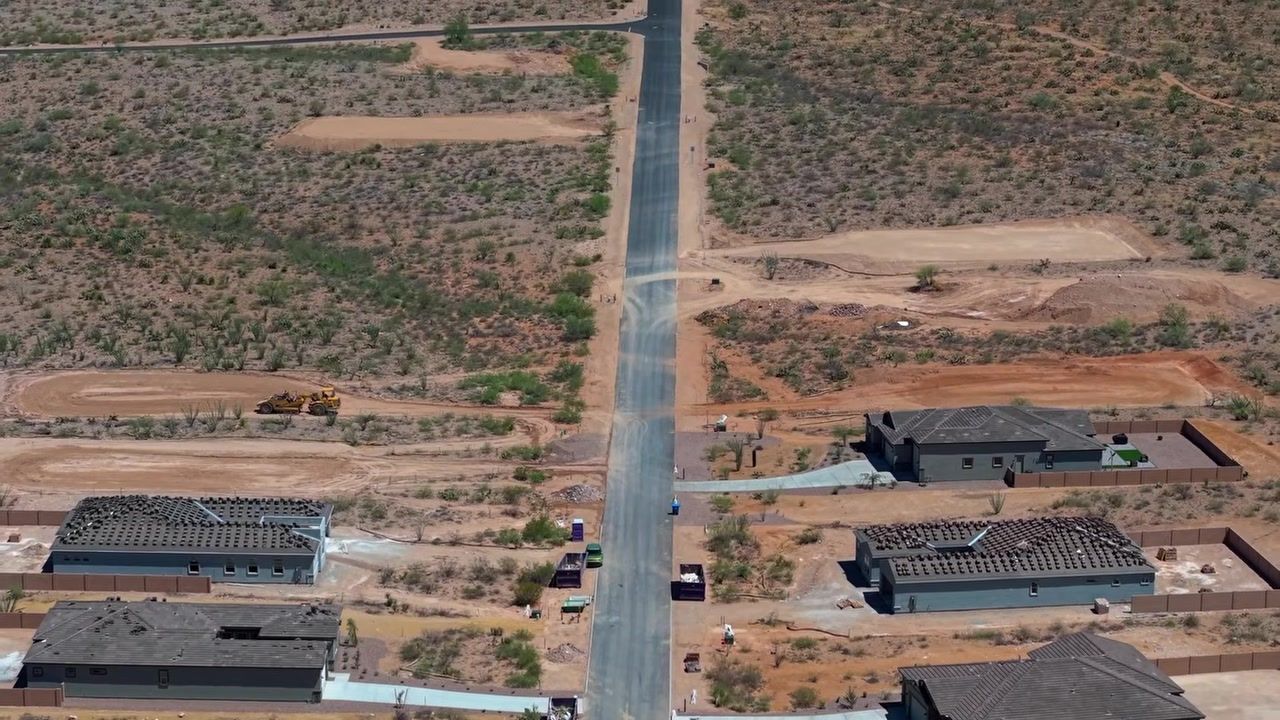
The downside is that this area is still building out. You're going to see dirt lots, unfinished roads, and the occasional gap in services while the infrastructure catches up to the housing. That doesn't bother everyone, but it does bother some buyers, and it's one reason this area hasn't cracked into the top spot yet. The buyers who are writing offers here are the ones who are okay trading a little bit of polish for a faster close and a lower price per square foot.
One thing I tell people: if you're buying here, make sure you understand what's still coming. New schools, new shopping, new parks, those are all on the horizon, but they're not here yet. If you need those things now, you're going to feel the gap. If you can wait two or three years for the area to fill in, you're buying at a point where the resale speed is improving faster than almost anywhere else in Tucson.
#3: Why the Winner Slipped (~75 Days)
The third-place finisher is the one that used to hold the top spot. A year ago, this area was the fastest-moving market in this comparison, with homes going under contract in about 68 days. Now it's sitting at 75, and the slip is worth understanding because it tells you something about how buyer priorities are shifting in Tucson.
This area has everything you'd expect to keep it at the top: established neighborhoods, mature landscaping, walkable pockets, and a reputation that's been solid for decades. But it's also the most expensive area in this group, and as rates have climbed, the buyer pool that can afford it has shrunk. The people who are still writing offers here are taking longer to decide, and they're more likely to walk away over inspection issues or appraisal gaps because they know they have options.
I'm also seeing more inventory sit here than I did a year ago. Not a flood, but enough that buyers don't feel the same urgency they used to. When there are three or four comparable homes available at the same time, they can afford to wait, and that waiting shows up in the days-on-market number.
The trade-off is that this area still holds value better than almost anywhere else in Tucson. If you're buying here, you're paying a premium, but you're also buying into a market that doesn't crater when things get rough. The resale speed might have slipped, but the resale price hasn't, and for some buyers, that's the more important number.
One thing to watch: if rates drop or inventory tightens again, this area will be the first to snap back. The fundamentals are still strong. The speed just isn't what it used to be.
#4: The "Safe Bet" That Takes Longer (~80 Days)
The slowest-moving area in this group is the one most people assume is the safest bet. It's Oro Valley , or at least, that's the area most buyers think of when they picture a stable, residential Tucson suburb with local schools and low crime. And they're not wrong about any of that. But safe doesn't always mean fast, and right now, Oro Valley is taking about 80 days on average to move a house.
That's not a disaster. Eighty days is still reasonable in a market where the national average is closer to 60, and Tucson as a whole runs a little slower than the Sun Belt cities people compare us to. But it's a full two weeks longer than the third-place finisher, and nearly a month longer than the fastest area in this ranking. If you're buying in Oro Valley with the assumption that you'll be able to flip it or relocate quickly, you need to price that extra time into your decision.
The reason Oro Valley takes longer comes down to price and buyer expectations. This is the area where buyers expect everything to be perfect: updated kitchens, desert landscaping, mountain views, and a floor plan that works for how people live now. If your house doesn't check all those boxes, it sits. I'm seeing homes here that are priced right but need cosmetic work take 90 or 100 days, while the move-in-ready ones go in 60. The spread is wider here than in any other area in this comparison.
The other factor is that Oro Valley has the most inventory of the four areas I'm ranking. More inventory means more choice, and more choice means buyers take longer to decide. They're not in a hurry because they know another house will hit the market next week. That's great if you're buying, but it's a headwind if you're selling.
One thing I tell people: Oro Valley is still the safe bet if your priority is stability and schools. But if your priority is resale speed, you're trading that safety for time on market. It's not a bad trade if you're planning to stay for five or ten years. It's a harder trade if you think you might need to move in two.
The MLS Rule That Resets Days on Market
Here's the thing almost nobody tells you: the days-on-market number you're reading online might be completely wrong. There's a rule in the local MLS that allows a listing to reset its day count if the property is withdrawn and relisted after a certain period, or if it goes under contract and that contract falls apart. The listing agent can pull it off the market, wait a few days, and relist it as a "new" listing with a fresh day count.
This happens more often than you think, and it's not always malicious. Sometimes a seller needs to make repairs or updates before relisting. Sometimes the agent realizes the price was wrong and wants a clean start. But the result is the same: a house that's technically been available for 90 days shows up as "7 days on market" when you're scrolling Zillow or Redfin.
The way to catch this is to look at the listing history. Most MLS platforms and public sites will show you when a property was first listed, when it was withdrawn, and when it came back. If you see a pattern of on-again, off-again listings, that's a red flag. It doesn't mean the house is a lemon, but it does mean the days-on-market number is not telling you the full story.
I also tell buyers to ask their agent to pull the full listing history from the MLS before they write an offer. You want to know how long the house has really been sitting, how many price cuts it's had, and whether there were any failed contracts. That context matters, especially if you're trying to decide how aggressive to be with your offer.
The reset rule is legal, and it's not going away. But it does mean you can't take the days-on-market number at face value. You have to dig one layer deeper, and most buyers don't know to do that until it's too late.
Which Tucson Area Offers the Fastest Exit?
If your priority is resale speed, not appreciation, not schools, not prestige, the ranking is clear. The fastest area is moving homes in about 65 days, and it's the one most people overlook. The slowest is Oro Valley at 80 days, and that's the one most people assume is the safest bet.
Here's how I'd break it down if you're trying to decide:
- Choose the fastest area if you're relocating for work, you're not sure how long you'll stay, and you want to know you can get out without sitting on the market for months.
- Choose the second-place finisher if you want a balance between resale speed and buyer perception, and you're okay with an area that's still building out.
- Choose the third-place area if you're willing to pay a premium for an established neighborhood and you're betting that the resale speed will snap back when rates drop.
- Choose Oro Valley if your priority is stability, schools, and long-term value, and you're planning to stay long enough that an extra two weeks on the market doesn't matter.
None of these areas are bad bets. They're just different bets, and the one that's right for you depends on what you're optimizing for. If you're buying with an eye on resale, the days-on-market number is just as important as the price per square foot, and it's the number most buyers ignore until they're trying to sell.
Three questions to ask before you write an offer: How long has this house really been on the market? How does that compare to the neighborhood average? And if I had to sell in two years, what would my realistic timeline be? If you can answer those three questions, you're ahead of most buyers in Tucson.
Conclusion
Resale speed is the number nobody talks about until it's too late. You can buy in the most prestigious neighborhood in Tucson, overpay by five percent, and still come out ahead if the market moves fast enough. Or you can buy in the "safe" area, price it right, and watch it sit for three months because buyer priorities shifted and nobody warned you.
I've ranked Catalina Foothills, Vail, Marana, and Oro Valley by how fast they're moving homes right now. The order is not what most people expect, and the gap between first and fourth place is wide enough that it should change how you think about where to buy. If you're relocating to Tucson and you want to know which area gives you the fastest exit if life moves you again, this is the breakdown you need.
If you want to dig deeper into which Tucson neighborhood fits your timeline, your budget, and your resale priorities, let's talk. I've been watching these numbers shift for years, and I can show you exactly where the data says you should be looking. Call/text me at 520-639-9117 or book a FREE consultation here. No pressure, no pitch, just the numbers and what they mean for your situation.
FAQ: Tucson Resale Speed by Neighborhood
Which Tucson neighborhood sells the fastest?
The fastest-selling area in this comparison is moving homes in about 65 days on average, based on the most recent twelve months of MLS data. That's nearly two weeks faster than the second-place finisher and a full month faster than Oro Valley. The speed comes from a combination of price point, buyer demand, and improving perception among relocating buyers.
Why does Oro Valley take longer to sell than other Tucson areas?
Oro Valley takes about 80 days on average because it has the most inventory of the four areas I ranked, and buyers here have higher expectations for condition and finishes. More inventory means more choice, and more choice means buyers take longer to decide. Homes that need cosmetic updates or don't show perfectly tend to sit longer here than in other parts of Tucson.
What is the MLS rule that resets days on market?
The local MLS allows a listing to reset its day count if the property is withdrawn and relisted after a certain period, or if a contract falls apart and the home comes back on the market. This means a house that's been available for 90 days can show up as "7 days on market" if it was relisted. Always ask your agent to pull the full listing history before you write an offer.
How much does resale speed matter when buying in Tucson?
Resale speed matters more now than it did when appreciation was covering mistakes. If you have to move in two or three years, the difference between a 65-day market and an 80-day market can mean the difference between a clean sale and carrying two mortgages while your house sits. It's especially important if you're relocating for work or buying in an area that's still building out.
Which Tucson area has the best balance between resale speed and long-term value?
The second-place finisher, moving homes in about 71 days, offers the best balance if you want resale speed without sacrificing buyer perception. It's improving faster than any other area in this ranking, and it's attracting a strong pool of relocating buyers who want space, newer construction, and a commute that doesn't kill the appeal. The trade-off is that the area is still building out, so you'll see some infrastructure gaps.
Should I avoid buying in an area with slower resale speed?
Not necessarily. Slower resale speed doesn't mean the area is a bad investment, it just means you need to plan for a longer timeline if you have to sell. Oro Valley, for example, takes longer to move homes, but it also holds value better than almost anywhere else in Tucson. If you're planning to stay for five or ten years, the extra two weeks on market won't matter. If you think you might need to move in two, it's a factor worth weighing.



Youtube Channel
Watch the latest with Enriched Homes
If you are considering a move to Tucson, we can assist you in navigating the various aspects of living in the city. Our experience encompasses a deep understanding of the local community, enabling us to help individuals and families find their ideal home. Whether you are planning your move now or in the future, feel free to contact us for guidance and support throughout your relocation process. We look forward to assisting you.

Enriched Homes is a Tucson real estate agency specializing in new construction. Rich Jacome, a Certified Appraiser and Realtor with over 2,000 transactions, is dedicated to helping clients achieve their real estate goals. A Tucson native, Rich has deep community ties and is also a committed investor and business coach, advocating for continual growth. Enriched Homes focuses on delivering exceptional service, and Rich's unmatched knowledge of the local market drives him to go the extra mile for clients.