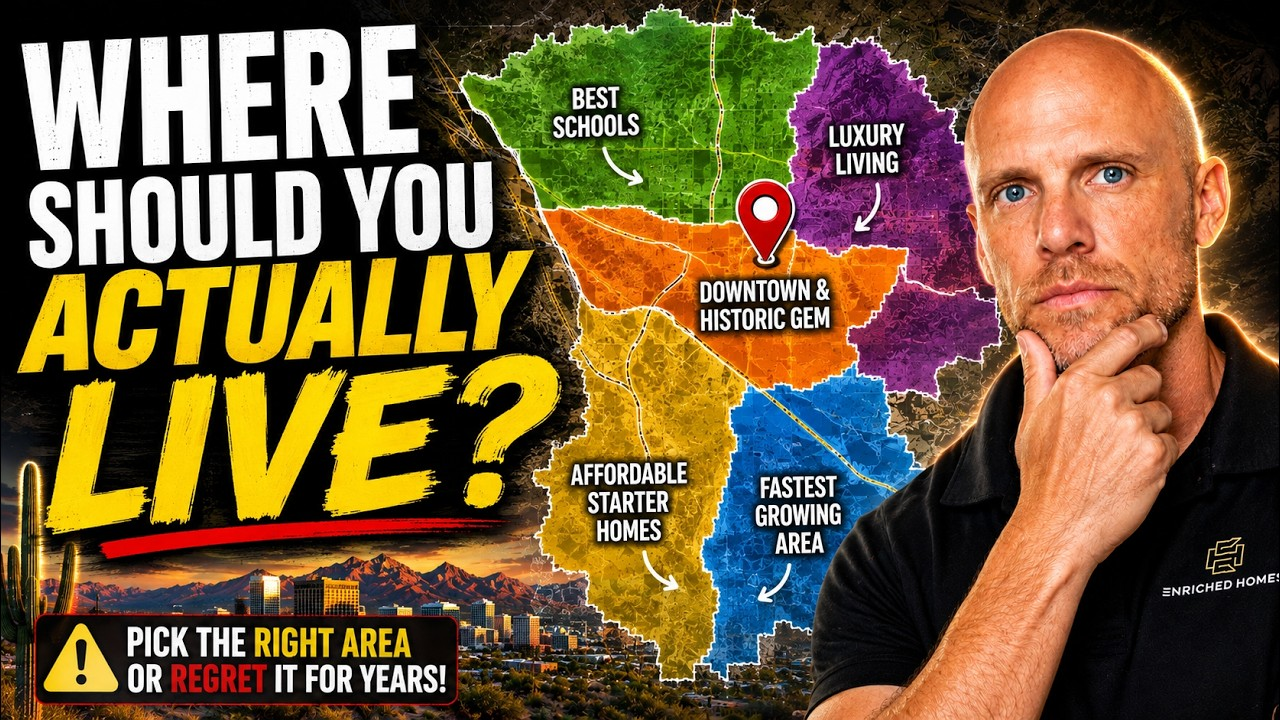
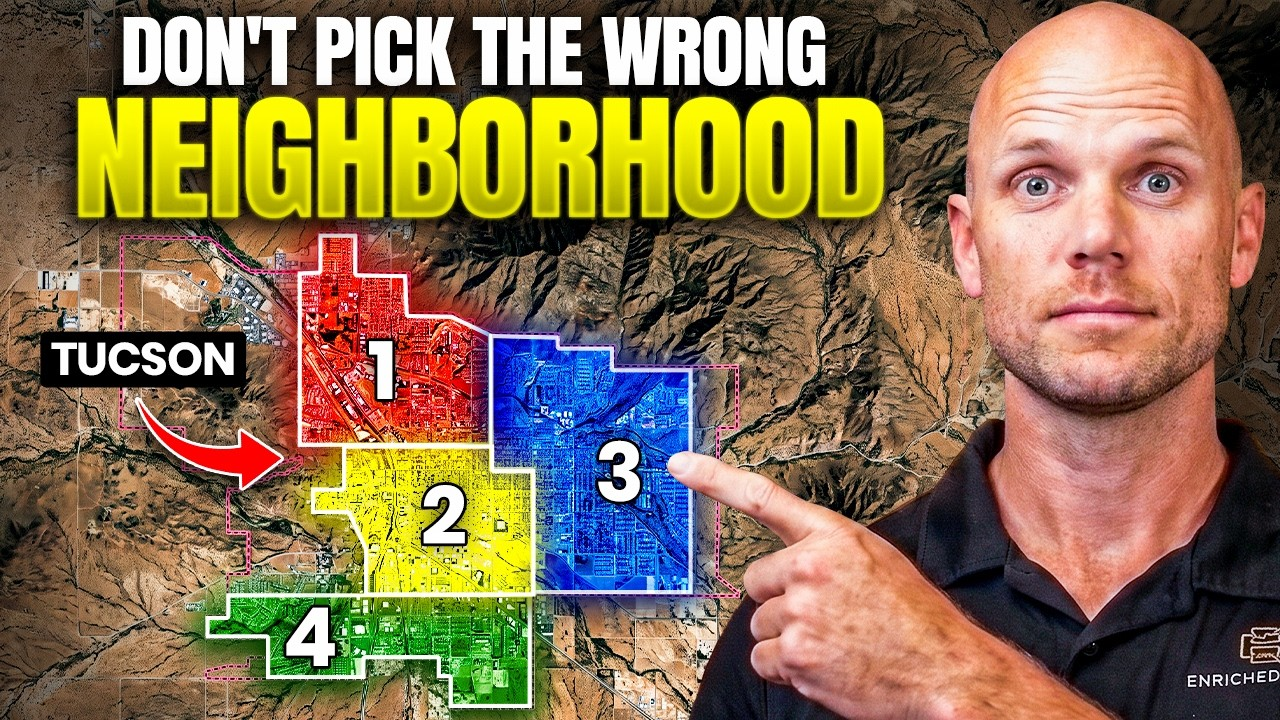
The new developments in Tucson AZ are not small strip-center additions. Billions of dollars are flowing into projects across Marana, Oro Valley, the Catalina Foothills, Vail, Rita Ranch, Sahuarita, downtown, and the southeast corridor. Some communities are finally getting the national retailers they have waited decades for. Others are creating walkable districts and entire downtown experiences from scratch.
For anyone moving to Tucson AZ, this is the kind of information that should be part of the home search. A great house is important, obviously. But so are the roads, amenities, jobs, retail, recreation, and development activity surrounding it.
Key Takeaways
Marana, Oro Valley, and the Foothills are adding major mixed-use districts, retail anchors, and lifestyle amenities.
Vail, Rita Ranch, and Sahuarita are gaining momentum as commercial development catches up with residential growth.
Mosaic Quarter and Project Blue could reshape the southeast corridor through sports tourism, investment, construction activity, and employment.
Project Blue offers major economic potential while raising legitimate concerns about water and energy use.
Table of Contents
New Developments In Tucson AZ: What Buyers Should Watch
New development does not automatically mean every nearby home value shoots up overnight. Real estate does not work that way. But commercial anchors and major public investment are absolutely data points. They show where population growth is expected, where businesses are willing to deploy serious money, and where a community is becoming more self-sufficient.
When evaluating the new developments in Tucson AZ, pay attention to a few things:
Scale:
Is it a single tenant, or a true mixed-use district with multiple phases?
Timing:
Is it approved, under construction, or already open?
Access:
Will roads, intersections, pedestrian connections, or freeway access improve?
Demand Drivers:
Does the project add jobs, retail, recreation, hospitality, or tourism?
Tradeoffs:
Will the area gain convenience but lose some quiet, open-desert character, or both?
That last point matters. Growth is exciting until it is happening near your backyard. The best decision is not automatically to chase every development. It is to understand the change clearly and decide whether that lifestyle fits what you want.
What’s New In Marana AZ
Marana
has been one of Arizona's fastest-growing communities for years. The rooftops came first. Now the commercial infrastructure is catching up in a big way.
The headline project is the Downtown Marana Entertainment District. The town approved the transformation of roughly 19 acres of town-owned property into a ground-up mixed-use destination. Plans include rodeo arenas, breweries, a hotel, retail, and public gathering spaces. Marana has never had a true downtown, so this is a major shift in how the town may function and feel.
Then there is Walmart. The company closed on a 176,000-square-foot site at Tangerine Road and Interstate 10, creating a major commercial anchor in one of the area's biggest growth corridors. Mountainside Fitness is also planned near Interstate 10 and Twin Peaks, with an expected late-2027 opening.
For the new developments in Tucson AZ, Marana is one of the clearest examples of a suburb evolving into a more complete city. Longtime residents may reasonably miss the quieter, more open version of Marana. But from a market perspective, new stores, services, and destinations are strong signals that demand is likely to keep building.
Oro Valley Marketplace Redevelopment
Oro Valley
has long been one of Southern Arizona's most desirable places to live, but the Oro Valley Marketplace had become underused and dated. That is now changing through a major redevelopment that began construction in October 2025.
When complete, the redevelopment is expected to add 320 apartments, a new neighborhood park, safer pedestrian connections, and intersection improvements. Completion is estimated for 2027. This is not just a cosmetic refresh. It is a genuine mixed-use rework of an important corridor.
Mountainside Fitness is expected to open its first Oro Valley location at the Marketplace in 2026. The planned facility is more than 40,000 square feet and includes cold plunges, infrared saunas, basketball and pickleball courts, yoga and group fitness studios, childcare, and an on-site cafe.
For someone moving to Tucson AZ who wants mountain access, outdoor lifestyle, and a community investing in its amenities, Oro Valley remains compelling. The town is also geographically constrained by mountains and state land. When supply is constrained and quality amenities continue to improve, that can create a very strong long-term story.
Uptown’s Transformation In Catalina Foothills
The old Foothills Mall at Ina Road and La Cholla Boulevard is gone. In its place, Bourn Companies is building Uptown, described as Tucson's first urban resort village. This is one of the most visually dramatic new developments in Tucson AZ.
Uptown spans approximately 100 acres and 2.5 million square feet. Plans include luxury apartments, restaurants, shops, entertainment, office space, and a Tempo by Hilton hotel targeted for a January 2027 opening. The Astria Apartments are already open, while additional restaurant and retail phases are expected through 2030.
The appeal here is simple. Catalina Foothills
and Northwest Tucson have always had beautiful homes and incredible views, but high-end dining and retail have historically centered around La Encantada. Uptown introduces another walkable, resort-style destination into the equation.
That may add a layer of demand to an already premium market. It also illustrates an important point for those tracking new developments in Tucson AZ: the strongest projects are not just stores or apartments. They create an experience that makes an area more useful, more connected, and more attractive day to day.
New Retail Coming To Vail And Rita Ranch
Vail
and Rita Ranch
have had a powerful draw for years: the Vail School District. The area has strong schools, plentiful neighborhoods, and often offers more house for the money than some higher-priced parts of the metro. The historical complaint has been commercial infrastructure. That is changing fast along the Houghton Road and Old Vail Road corridors.
Mountainside Fitness is planned for Houghton Town Center on Old Vail Road, with an anticipated winter 2026 opening. More importantly, the City of Tucson approved tax incentives to bring Costco to the southeast side.
A Costco is more than a convenient place to buy bulk groceries. It is an indicator of expected long-term population growth and a major commercial anchor that can pull additional services and retailers into the corridor. For buyers who have been priced out of Oro Valley, Vail and Rita Ranch deserve a serious look.
Of all the new developments in Tucson AZ, this is a classic case of commerce catching up to rooftops. The schools and residential base were already there. Now the everyday amenities are following.
New Commercial Development In Sahuarita AZ
Rancho Sahuarita
is already one of the premier master-planned communities in Southern Arizona. It is built around a large man-made lake and offers pools, spas, splash pads, parks, walking paths, a clubhouse, and a deep calendar of community events. Club del Toro has also opened as the newest recreation amenity within the community.
The missing piece has been a major national retail anchor. Scottsdale developer SimonCRE filed a pre-application for a 17.3-acre commercial center in front of the Rancho Resort, with Target rumored as a possible anchor tenant.
It is important to be precise here. Target is not presented as a finalized deal. But if the project advances with that kind of anchor, it would be a major milestone for Sahuarita. National retailers look closely at household growth, density, spending patterns, and demographics. Landing one can make it easier for others to follow.
For new developments in Tucson AZ, Sahuarita represents the value play: more home, more amenities, and a very community-oriented lifestyle for the dollar. A major commercial center would make the area feel even more self-sufficient.
Mosaic Quarter And Downtown Tucson
Central Tucson and downtown are having a real moment. The biggest story is Mosaic Quarter, a 90-acre sports and entertainment complex planned near Kino Sports Complex at Interstate 10 and Campbell Avenue. Phase one is a $425 million investment, currently under construction, with an anticipated 2027 opening.
The full multi-phase project is projected to generate $8.3 billion in new local spending. Phase one includes three hockey rinks. Later phases include the MQ Field House, a two-story facility with eight NCAA basketball courts, eight competition volleyball courts, four indoor soccer fields, 24 pickleball courts, football fields, wrestling and judo mats, a rooftop patio, team spaces, and a 20,000-square-foot sports medicine center operated by TMC Health and Tucson Orthopedic Institute.
MQ Crossing is planned as the outdoor social hub, with casual restaurants, an open-air event plaza, live music and movie space, community performances, and a splash pad. Tucson has lacked facilities to host many large regional and national sports events. Mosaic Quarter could change that completely by bringing sports tourism, teams, and families into the city instead of sending them to Phoenix or the West Coast.
Other central-city momentum includes La Rosa, a music venue in the restored Benedictine Monastery; a Trader Joe's under construction on Broadway; Bass Pro Shops at The Bridges near Kino and Interstate 10; and The Bautista, a 256-unit apartment project with ground-floor commercial space in the Mercado District.
These new developments in Tucson AZ are changing the central-city conversation. The story is no longer just revitalization. It is the addition of entertainment, housing, destination retail, hospitality, and serious recreation infrastructure in connected corridors.
Project Blue And Southeast Tucson
Project Blue is the most controversial project on this list, and it deserves an honest look. Beale Infrastructure is proposing a data center campus on 290 acres north of the Pima County Fairgrounds near Houghton Road. The proposed capital investment is $3.6 billion, with a first building potentially operational in 2027 and up to 10 buildings at full build-out.
The economic case is substantial. The project is projected to produce $250 million in tax revenue over 10 years, including approximately $97 million for the City of Tucson. Combined with Mosaic Quarter, The Bridges, Bass Pro Shops, and Interstate 10 corridor activity, Project Blue could strengthen the southeast side as one of the metro's largest employment and investment centers.
But Tucsonans are rightly passionate about the desert and water conservation. A massive data center raises serious concerns about water and electricity consumption. The public debate has been fierce, and it should be. Growth without scrutiny is not responsible growth.
There is another reality to acknowledge. Data centers do not need enormous permanent workforces once they are operational. Project Blue is projected to create about 180 permanent jobs, which is modest relative to a $3.6 billion investment. The construction phase, however, is projected to support more than 3,000 construction jobs over a multi-year build-out, benefiting electricians, plumbers, ironworkers, concrete crews, and other skilled trades.
That is why Project Blue is such a big story for the new developments in Tucson AZ. It carries genuine economic potential, real neighborhood implications, and legitimate resource concerns all at the same time. Anyone considering the southeast corridor should follow it closely rather than reducing it to a simple good-or-bad headline.
What Tucson’s Growth Means For Homebuyers
If you are moving to Tucson AZ, do not buy a home based only on today's convenience map. Look at approved projects, construction activity, future traffic patterns, schools, employment centers, retail anchors, and the lifestyle you want once the dust settles.
Marana is building a downtown identity. Oro Valley is reinvesting in a constrained, desirable community. Uptown is redefining the former Foothills Mall site. Vail and Rita Ranch are gaining the commercial services their residential growth has needed. Sahuarita could take a major step forward with national retail. Central Tucson is stacking projects that bring new energy to the city. And the southeast corridor is becoming one of the most important areas to track.
The new developments in Tucson AZ are leading indicators, not guarantees. Use them to ask smarter questions. Is this neighborhood becoming more convenient? More active? More valuable? More congested? More aligned with your lifestyle, or less? Those are the questions that help you make a confident decision.
FAQs About New Developments In Tucson AZ
Which areas have the biggest new development activity?
Major activity is happening in Marana, Oro Valley, the Catalina Foothills and Northwest Tucson, Vail and Rita Ranch, Sahuarita, downtown Tucson, and the southeast corridor near Kino Sports Complex and Houghton Road.
What is being built at the old Foothills Mall?
The former mall is being redeveloped as Uptown, a 100-acre mixed-use urban resort village with apartments, a Tempo by Hilton hotel, restaurants, shops, entertainment, offices, and additional phases planned through 2030.
Is Costco coming to the southeast side of Tucson?
The City of Tucson approved tax incentives to bring Costco to the southeast side, helping establish the Old Vail Road corridor as a major commercial hub.
Why is Project Blue controversial?
Project Blue is a proposed $3.6 billion data center campus near Houghton Road. Supporters point to projected tax revenue and construction employment, while opponents raise concerns about water use, electricity use, and the relatively modest number of permanent jobs.
Thinking about moving to Tucson, AZ? Let’s look beyond today’s neighborhood and find a home in an area that fits your lifestyle and future plans. Call/text me at 520-639-9117
connect with me here
to discuss the Tucson communities and new developments worth watching.
READ MORE: Best Neighborhoods in Tucson AZ for Long-Term Value